BETWEEN SCREENS?
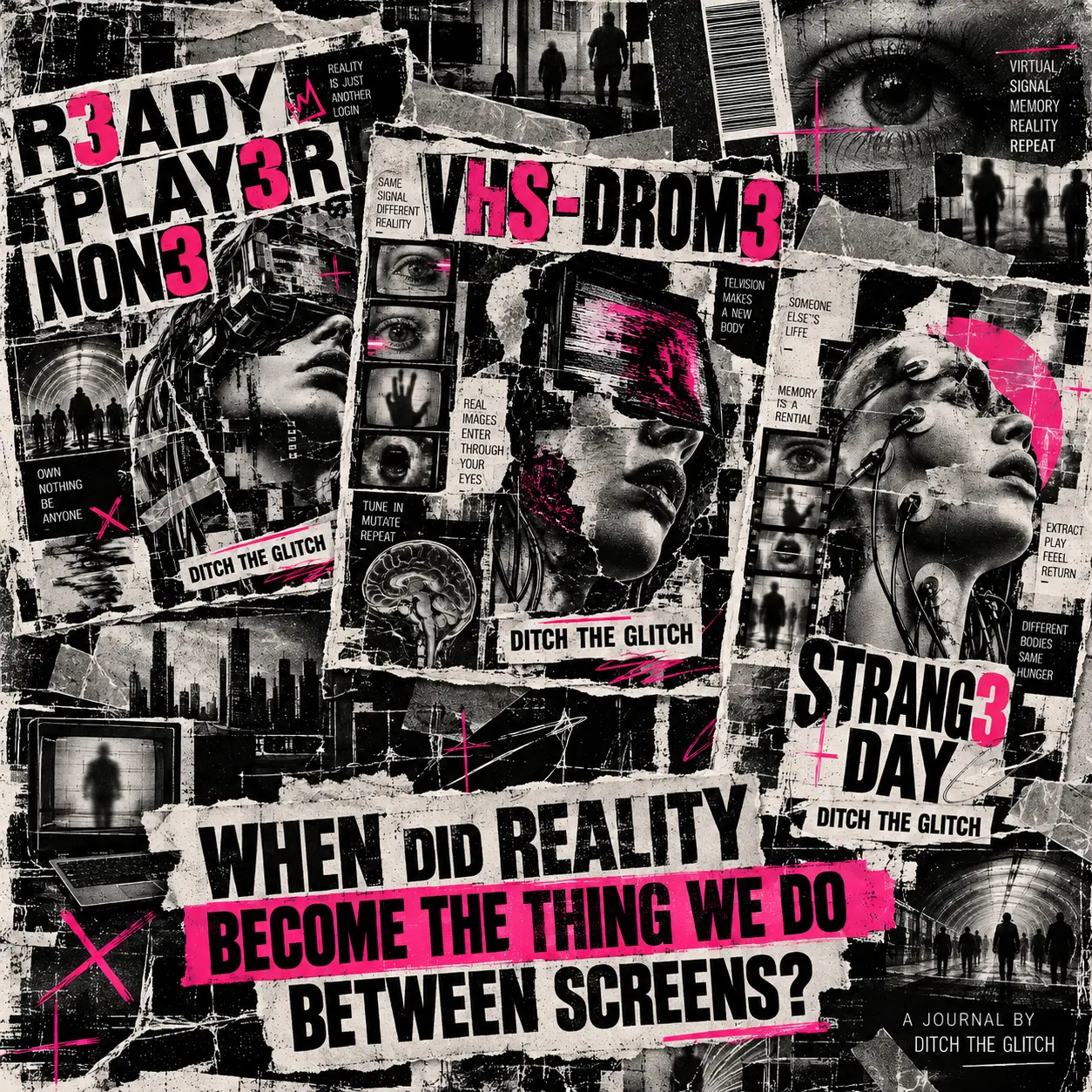
We didn't set out to make a statement about technology with these three releases. We simply had three films we wanted to explore: Ready Player One, Videodrome, and Strange Days. Different films, different visions of the future. But while making the music, we started noticing what connected them. All three are about choosing something artificial over reality. And that doesn't feel very futuristic anymore.
Somewhere along the way, we also realised we'd accidentally made another Trinity series. Three films. Three releases. Nine tracks. All coming in November: 6, 13 and 20.
Think about how often you pick up your phone for no reason at all. Waiting for the bus. Watching TV. Eating lunch. Going to bed. There's always something waiting—another notification, video, story, or something an algorithm thinks you'll want to see.
Most of it is harmless. A lot of it is great. We love this stuff. But when did reality become the thing we do between screens?
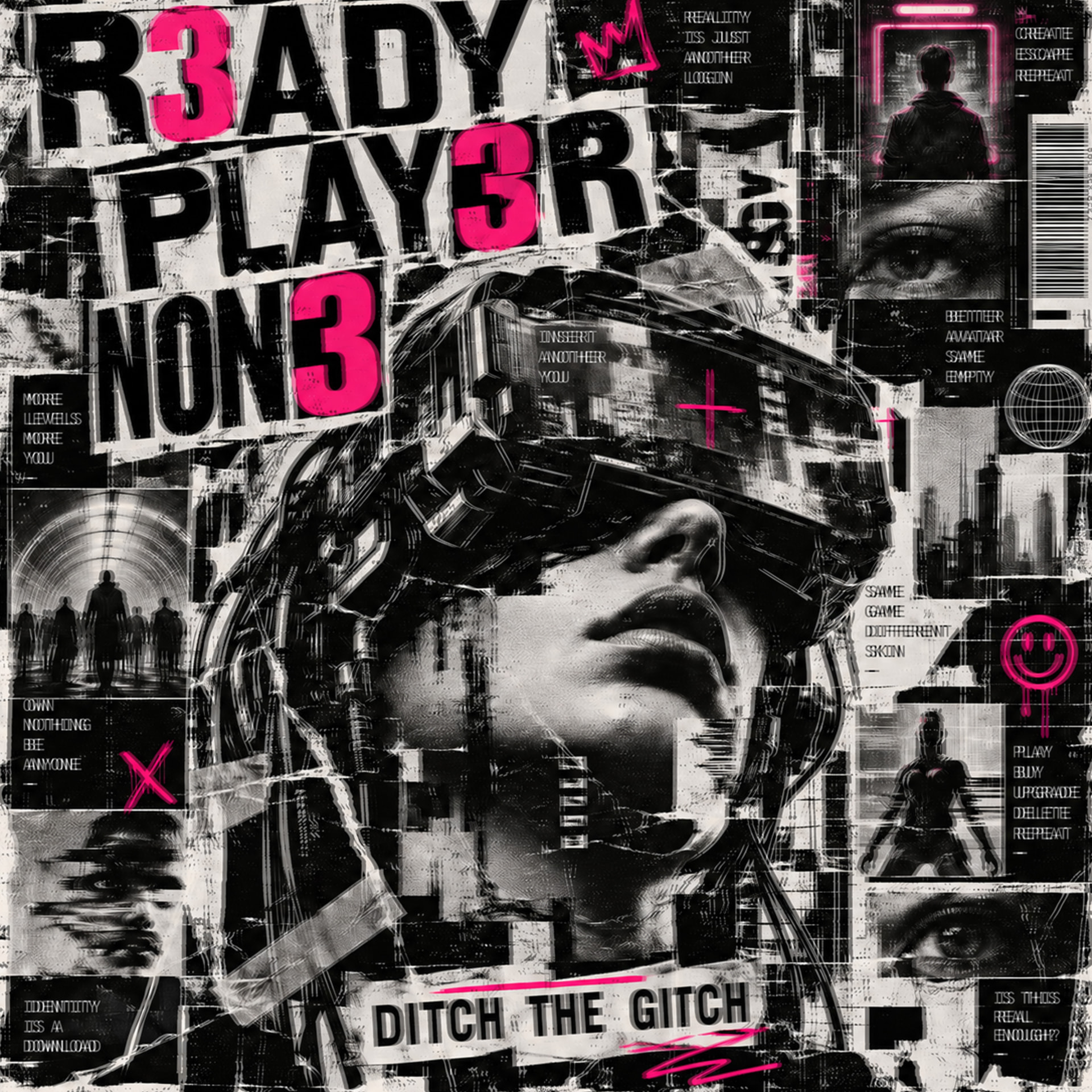
R3ADY PLAY3R NON3
Ready Player One imagines people escaping a pretty awful reality by entering the OASIS, where they can become whoever they want to be.
We're obviously not living in the OASIS. But spending hours inside digital worlds doesn't sound particularly futuristic anymore. Neither does creating an online version of yourself, or choosing a screen because what's happening there is more interesting than what's happening right around you.
We don't need a dystopian world to want an escape. Sometimes the digital one is simply more entertaining than the real one. That's where R3ADY PLAY3R NON3 came from.
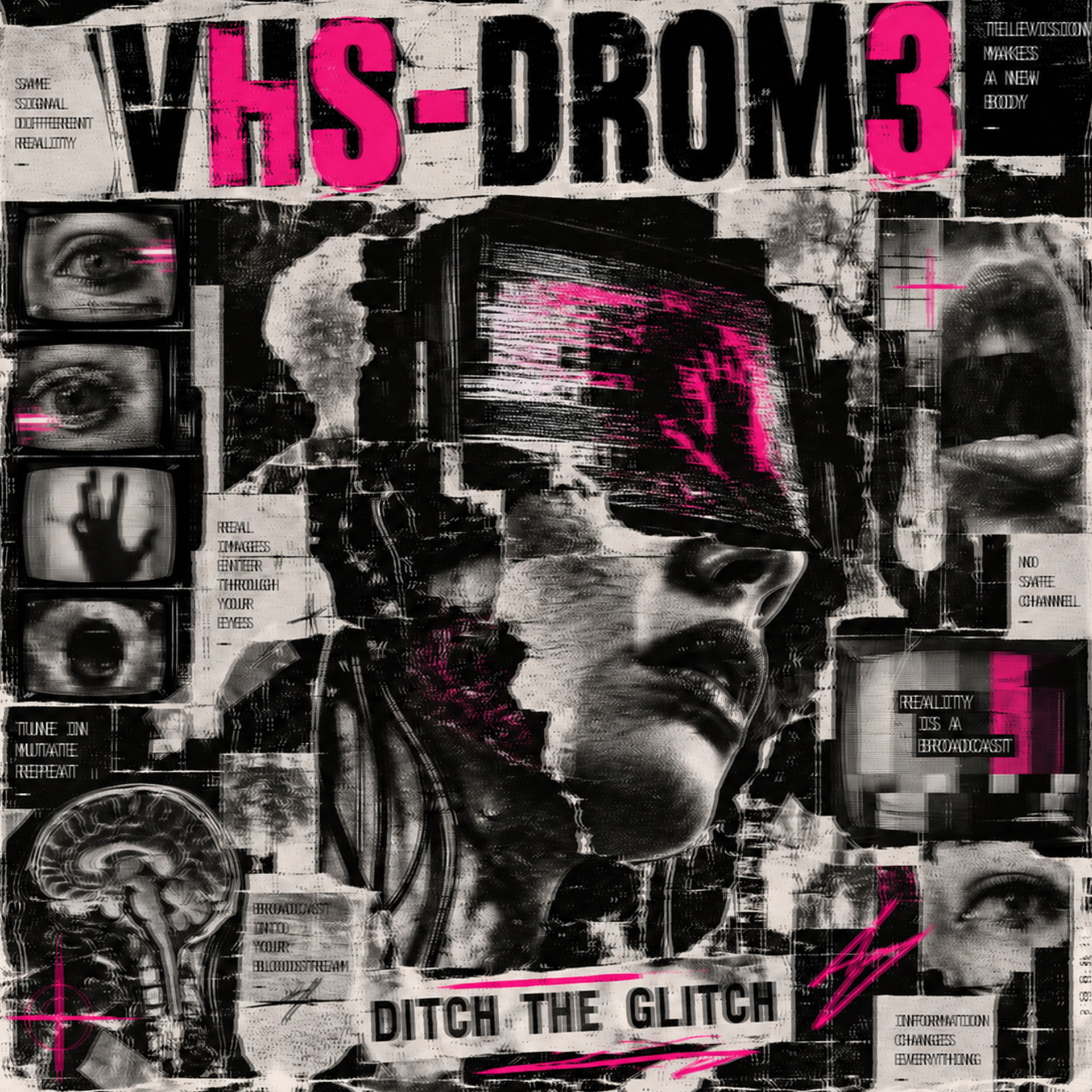
VHS-DROM3
In Videodrome, the signal starts affecting the person watching it. Reality and what comes through the screen begin to blur. Our phones aren't turning into flesh, but the constant craving for more feels surprisingly current. Faster. Funnier. Weirder. More shocking. You finish one thing and your thumb is already moving to the next. Often you're not even looking for anything—you're just checking.
VHS-DROM3 takes that feeling somewhere much uglier.
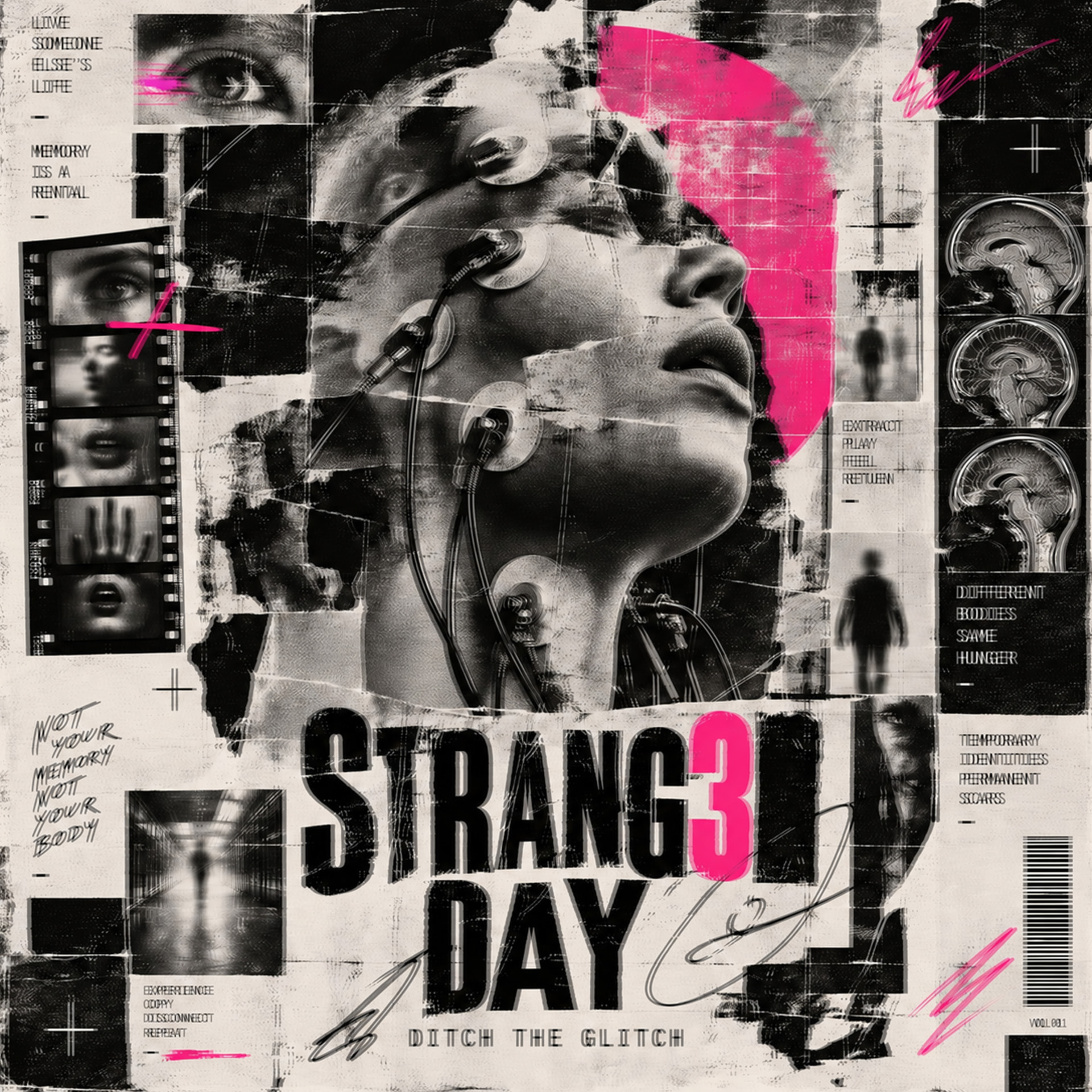
STRANG3 DAY
Strange Days lets people experience recorded memories and sensations from somebody else's life. We can't do that yet, but we can spend hours watching fragments of other people's lives—their holidays, relationships, arguments, successes, and breakdowns. People we've never met can start feeling oddly familiar, while the person sitting right next to us is also staring at a screen.
That's the idea behind STRANG3 DAY. Something that once felt like science fiction suddenly doesn't feel quite so fictional.
AND THEN THE MUSIC GOT LOUDER
These releases also pushed our music somewhere new. We'd already started experimenting with digital hardcore, but this time we stopped being so careful. Faster beats. Dirtier electronics. Distortion, broken rhythms, and more noise. And, probably more importantly, more attitude. Not aggression for the sake of it—there still has to be a song underneath.
Controlled chaos became the best way to describe it: letting something sound like it's about to fall apart without actually losing control. Ready Player One brought the speed and artificial rush. Videodrome let things get genuinely ugly. Strange Days brought something darker and more obsessive. It still sounds like DITCH THE GLITCH. We just found another side of it. And we really like that side.
THE AWKWARD PART
There's an obvious contradiction here. DITCH THE GLITCH is built on technology. We make music with machines, we use AI, and we created three fictional characters with an entire world around them. Then we put it all online and hope people spend some of their attention on it. So we're not here to tell anyone to throw their phone away. We don't want to, either.
Maybe that's why these films feel so relevant now. They're not really about "evil technology." They're about how easily we're pulled toward something more exciting than ordinary life. And these days, ordinary life has a lot more competition. Which brings us back to the question:
When did reality become the thing we do between screens?